
.svg)
.svg)

.svg)

.svg)
If you've ever spent a bluebird day on Mt. Bachelor and come home with a sunburn in February, you already know that Central Oregon plays by different rules. Bend sits at over 3,600 feet above sea level, with more than 300 days of sunshine a year, which delivers more UV radiation to your skin than most people expect, and far more than most people prepare for.
Since UV exposure increases by roughly 10% for every 100 meters of altitude gain, a day on the mountain or even an afternoon trail run above town adds up in ways that won't show on your skin today, but will years from now.
The good news is that most sun damage is preventable, and even damage that has already appeared can be treated. This guide covers everything Oregon residents need to know: how to choose the right SPF, why winter sun is more dangerous than it looks, how to spot the early warning signs of skin cancer, and where to find the best skin cancer screenings in Bend to keep you protected.
What SPF Actually Means and Which Sunscreen Is Right for You
Walk down any drugstore sunscreen aisle, and the numbers can feel random and confusing: SPF 15, 30, 50, 100. Most people grab whatever looks right and move on. But understanding what SPF actually measures can change how you use it. SPF stands for Sun Protection Factor, and the number tells you how much longer you can stay in the sun before UVB rays begin to burn your skin compared to wearing nothing at all. SPF 30 blocks about 97% of UVB radiation, and SPF 50 blocks roughly 98%. That gap sounds small, but for someone spending long hours outdoors, it adds up over a season.
What matters more than the number, though, is reapplication. No sunscreen lasts all day. If you are hiking, paddling the Deschutes, or watching your kid's soccer game, plan to reapply every two hours and more often if you are swimming or sweating.
Chemical Sunscreens vs. Mineral Sunscreens
When it comes to formula, there are two main types to know: chemical sunscreens absorb UV rays and convert them to heat, while mineral sunscreens, those made with zinc oxide or titanium dioxide, sit on top of the skin and physically block UV rays from making contact. Dermatologists often recommend mineral formulas for people with sensitive skin, and they are a strong choice for kids. For those with active lifestyles in and around Bend, look for a broad-spectrum formula rated SPF 30 or higher that is also water-resistant, and remember that water-resistant does not mean waterproof.
Do You Need a Broad-Spectrum Sunscreen?
Broad-spectrum means the product protects against both UVA rays, which age the skin, and UVB rays, which burn it. Both cause damage, and both contribute to skin cancer risk. In short, choosing a broad-spectrum sunscreen is the way to go.
Why UV Rays Are Stronger Than You Think
Most people associate sun damage with summer, heat, and long beach days. But Central Oregon challenges all three of those assumptions. At 3,600 feet above sea level, the atmosphere above Central Oregon is thinner than it is at the coast, which means it filters out less UV radiation before it reaches your skin. The effect is real and measurable. A morning ski run on Mt. Bachelor, sitting above 9,000 feet, exposes you to significantly more UV than the same amount of time spent outside in Portland. On top of that, snow reflects up to 80% of UV radiation upward, so your face, neck, and the underside of your chin can burn even when you are bundled up in a jacket and goggles.
The same principle applies to water in summer. The Deschutes and the lakes east of the Cascades bounce UV rays onto any exposed skin. Bend also sits in the high desert rain shadow, which means clear, dry skies are the norm rather than the exception.
There are rarely enough cloudy days to reduce your UV exposure in any meaningful way, even in the middle of winter. The UV Index, a daily forecast available through weather apps and the EPA's website, is one of the most useful tools you are probably not using. Checking it takes about five seconds, and it tells you exactly how much protection you need before stepping outside that day.
How to Protect Your Skin in Every Season
A lot of people wear sunscreen from Memorial Day to Labor Day and call it done. That window misses a lot of the year and a lot of the damage. Ultraviolet or UV radiation does not follow the calendar. It is present every day, and according to the CDC, up to 80% of UV radiation passes right through cloud cover. That means a gray October afternoon on the Deschutes Trail is not a free pass for bare skin.
Building sun protection into your daily routine, regardless of season, does not have to be complicated:
- In the fall and winter, a moisturizer with SPF 30 built in takes care of most incidental daily exposure.
- In spring and summer, when you are spending longer stretches outside, a dedicated sport sunscreen applied before you head out and reapplied through the day makes a bigger difference.
- Wearing protective clothing is an underrated tool. Shirts, hats, and pants rated UPF 50+ block UV rays the way sunscreen does, without requiring reapplication.
- A wide-brim hat that shades your face, ears, and neck does the work of a lot of sunscreen.
- Speaking of ears and neck, those are two of the most commonly missed spots, along with the tops of your hands, your lips, and the back of your neck.
- Lip balm with SPF exists for a reason, and it is worth keeping one in every jacket pocket, trail bag, and car console you own.
Skin Cancer Warning Signs
Skin cancer is the most common cancer in the United States, and the earlier it is caught, the easier it is to treat. Most skin cancers are highly treatable when found early, and a simple habit of checking your own skin once a month can make a real difference.
The most widely used tool for self-examination is the ABCDE rule. Look at your moles and spots and ask:
- Is it Asymmetrical, meaning one half does not match the other?
- Are the Borders ragged or blurred instead of smooth?
- Is the Color uneven, with multiple shades of brown, black, red, or white?
- Is the Diameter larger than a pencil eraser?
- Has it Evolved in size, shape, or color over time?
Beyond melanoma, basal cell carcinoma and squamous cell carcinoma are types of skin cancer that are far more common and tend to show up as pearly or waxy bumps, flat pink patches, or sores that heal and then reopen. They most often appear on areas that get regular sun exposure: the face, ears, scalp, and tops of the hands.
If you have lived an outdoor life in Central Oregon, wearing sunscreen and getting an annual full-body skin check is the most practical way you can lower your risk of skin cancer. You do not need to wait until something looks serious before making that appointment.
Sun Damage Repair
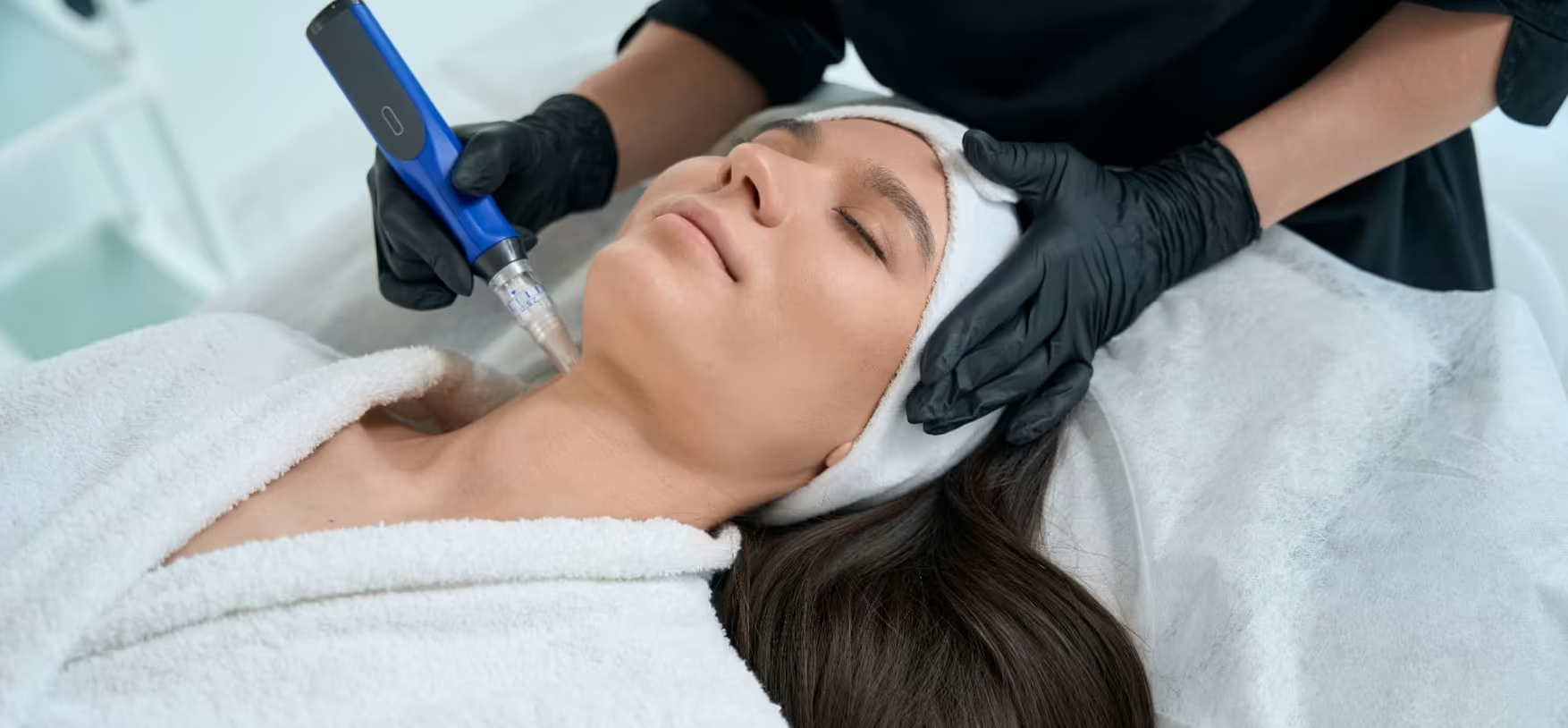
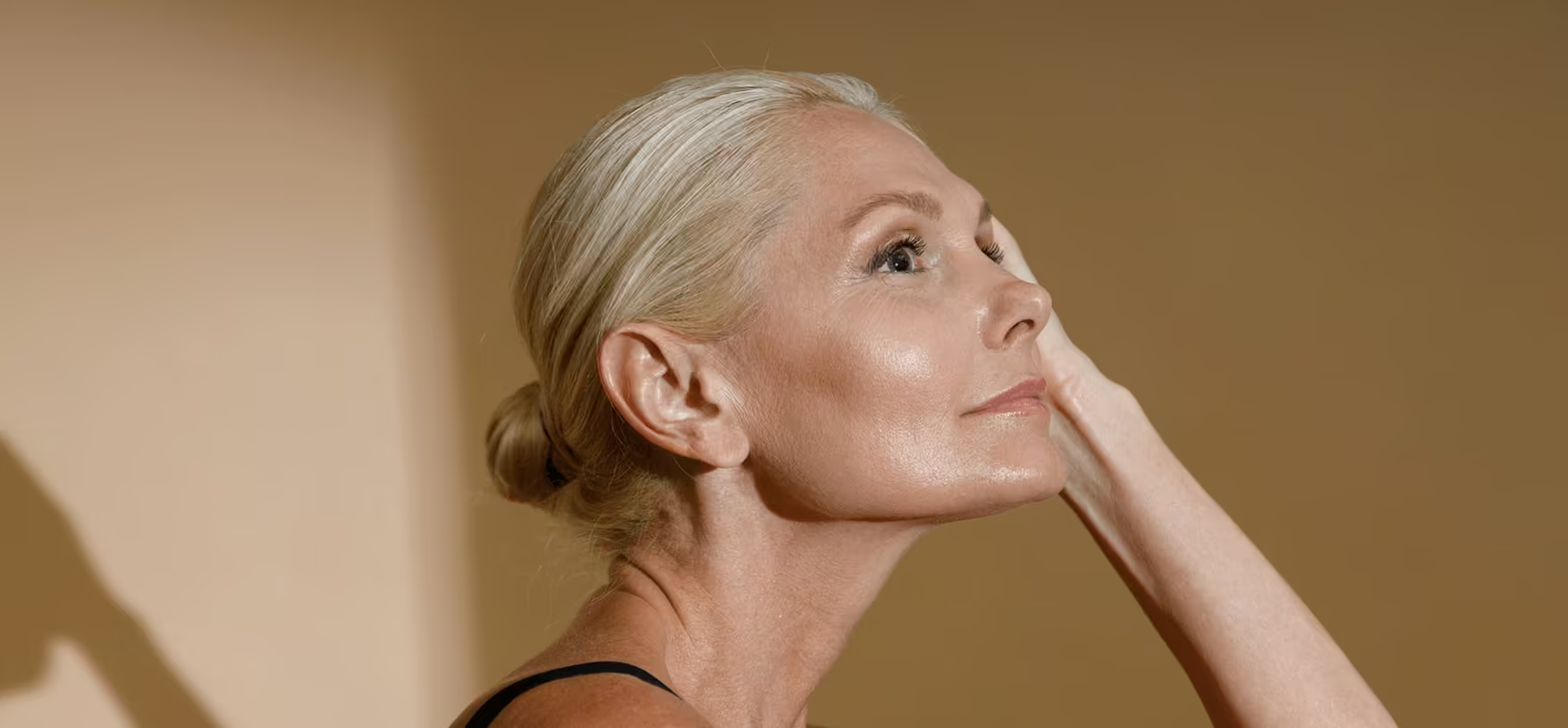
Sun damage shows up as dark spots, rough patches, uneven skin tone, or fine lines in places that spend the most time in the sun. For many people who have spent years hiking, skiing, and living outdoors, this causes premature aging and increases the risk of skin cancer. The reassuring news is that a lot of it can be treated.
One of the most important things a dermatologist can identify is actinic keratoses, rough, scaly patches that form on sun-exposed skin and are considered precancerous. Treating them early, before they progress, is straightforward and highly effective. Common in-office treatments include:
- Cryotherapy, which uses liquid nitrogen to freeze and remove damaged cells
- Chemical peels
- Laser resurfacing
- Photodynamic therapy, which uses light-activated medication to target damaged skin
At home, a few ingredients have strong clinical evidence behind them:
- Retinoids, which are vitamin A derivatives available both by prescription and over the counter, help rebuild collagen and fade discoloration over time.
- Vitamin C serums work to brighten uneven tone, and niacinamide helps calm inflammation and reduce the appearance of dark spots.
Finding the Best Dermatology Care in Bend, Oregon
Bend, Oregon, is the kind of place that makes you want to be outside. That is part of why people move here, and part of why they stay. But the same sun that lights up the Cascades and turns the Deschutes a perfect shade of blue is also adding up on your skin every single day, on the trails, on the mountain, in the backyard, and even on the drive to the grocery store. Protecting yourself requires only a few consistent habits: an annual skin check and knowing where to go when you have questions or concerns.
For those looking for the best dermatologist in Bend, Amy Snow, PA-C, offers full-body skin cancer screenings, treatment for actinic keratoses and other forms of sun damage, and personalized skincare plans for anti-aging and treatment of skin conditions. Whether you have a spot that has been bothering you, or you just know it has been too long since anyone looked closely at your skin, we are here for both.
Ready to protect your skin with the best dermatology care in Bend, Oregon?






.jpg)







.svg)
.svg)

.svg)